Bubble Skirt for a Bubbly Granddaughter

What a cute, cute skirt pattern.
I used Butterfly Kisses pattern number 112.
No pattern pieces involved, just instructions.
It uses simple rectangles for the construction.
For my 4 year-old granddaughter, I made the corresponding age size.
It fits her perfectly (I will update with photos of my pint-size model when my daughter sends them).

My fabric of choice for the outside skirt panel was this very soft, drapey, 21 whale corduroy.
It is called Blue Jay Cool Cords for Robert Kaufman.
I am in love with this fabric!
I’ve never felt such a soft corduroy.
The corduroy is lightweight enough to wear with flip flops and a t-shirt or tank
during the summer months,
but it can then be paired with leggings and a sweater to be worn in the fall.
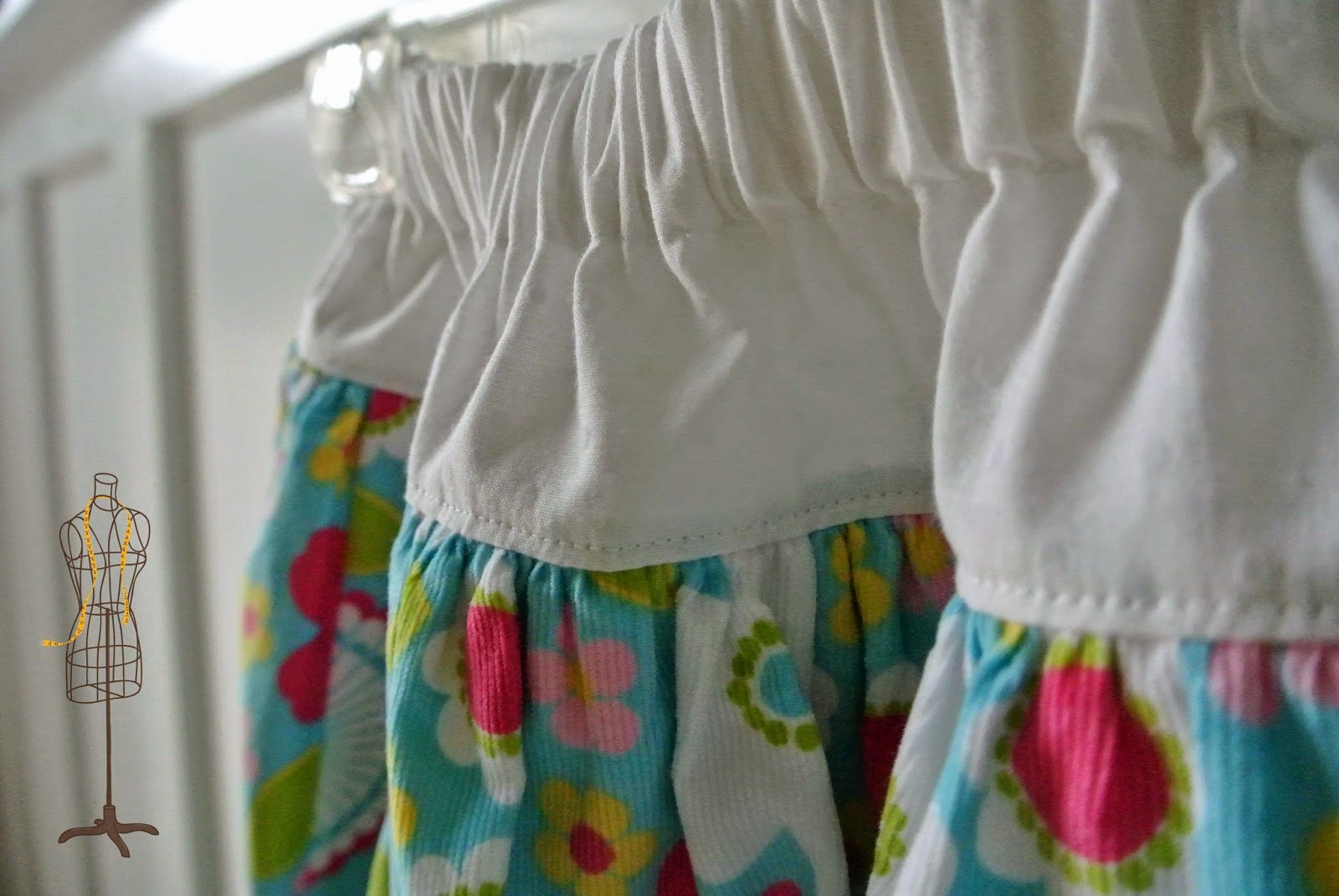
 
 
For the yoke, I used  a white pin dot from my stash.
And . . .
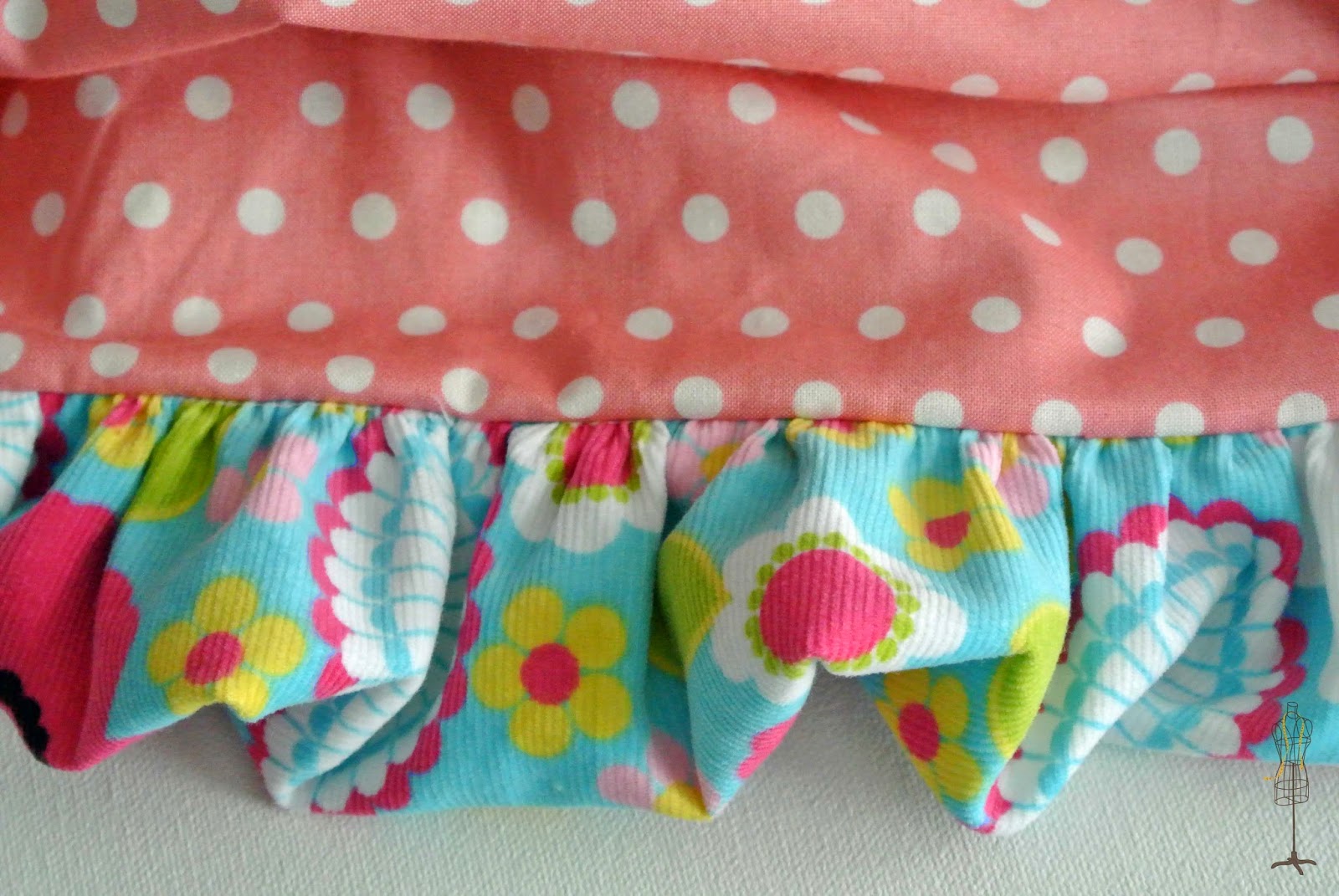
 
the lining is a pink polka dot – also from my stash.
 
 
My serger came in handy for construction of everything except the elastic waist casing.
The basic premise of a bubble skirt is that the lining (pink polka dot) is smaller
than the outside, main fabric (the cook cord).
Therefore, the corduroy had to be gathered to fit the lining piece.
I used the gathering foot to quickly accomplish that step.
Stay tuned for another installment of Stitch Selection Savvy,
which will focus on gathering.
 
Until then, my friends, happy sewing!


Stitch Selection Savvy – The Triple Straight Stitch

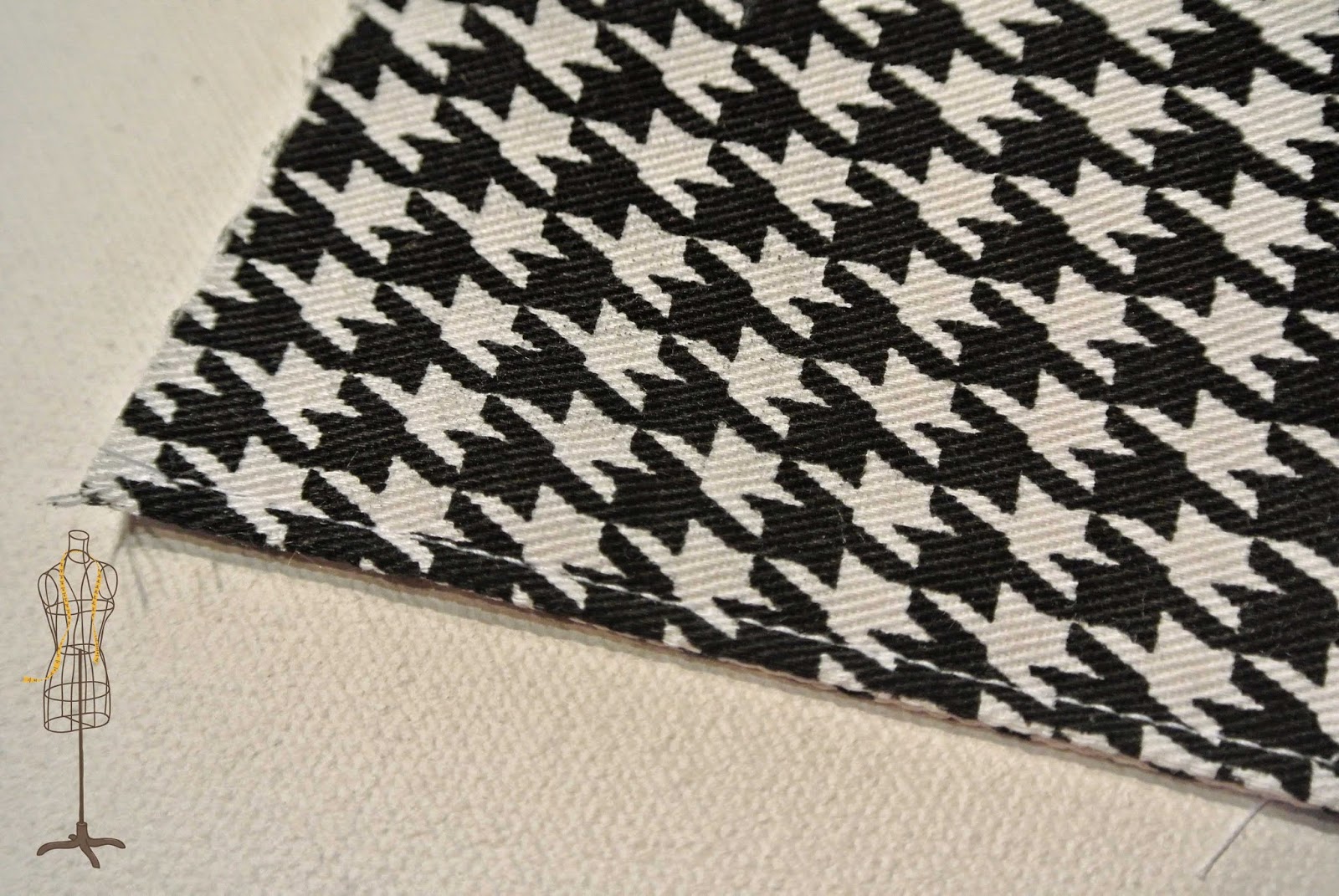
This is the topstitching on my Herringbone Jacket
I want to share with you all, how to achieve a perfect topstitch without purchasing special thread.
 
The triple straight stitch is used for reinforced seams, and it is also perfect for topstitching.
Ordinarily topstitching is accomplished by using a straight stitch and a heavy weight topstitch thread.
But the same, if not better, results can be achieved by using regular weight (40w)
multi-purpose thread in conjunction with the triple straight stitch,
which is standard on many of today’s sewing machines.
The stitch icon looks like stitch number 31 on this sewing machine:

 
Your sewing machine will take one stitch forward,
one stitch back over that same stitch,
and again one stitch forward over the previous two stitches.
Three stitches in all, but the end result is one straight stitch.
Thus the name – triple straight stitch.
 
 
This is the same number of layers of fabric and the same thread,
but topstitched with a regular straight stitch.
See the difference?
 
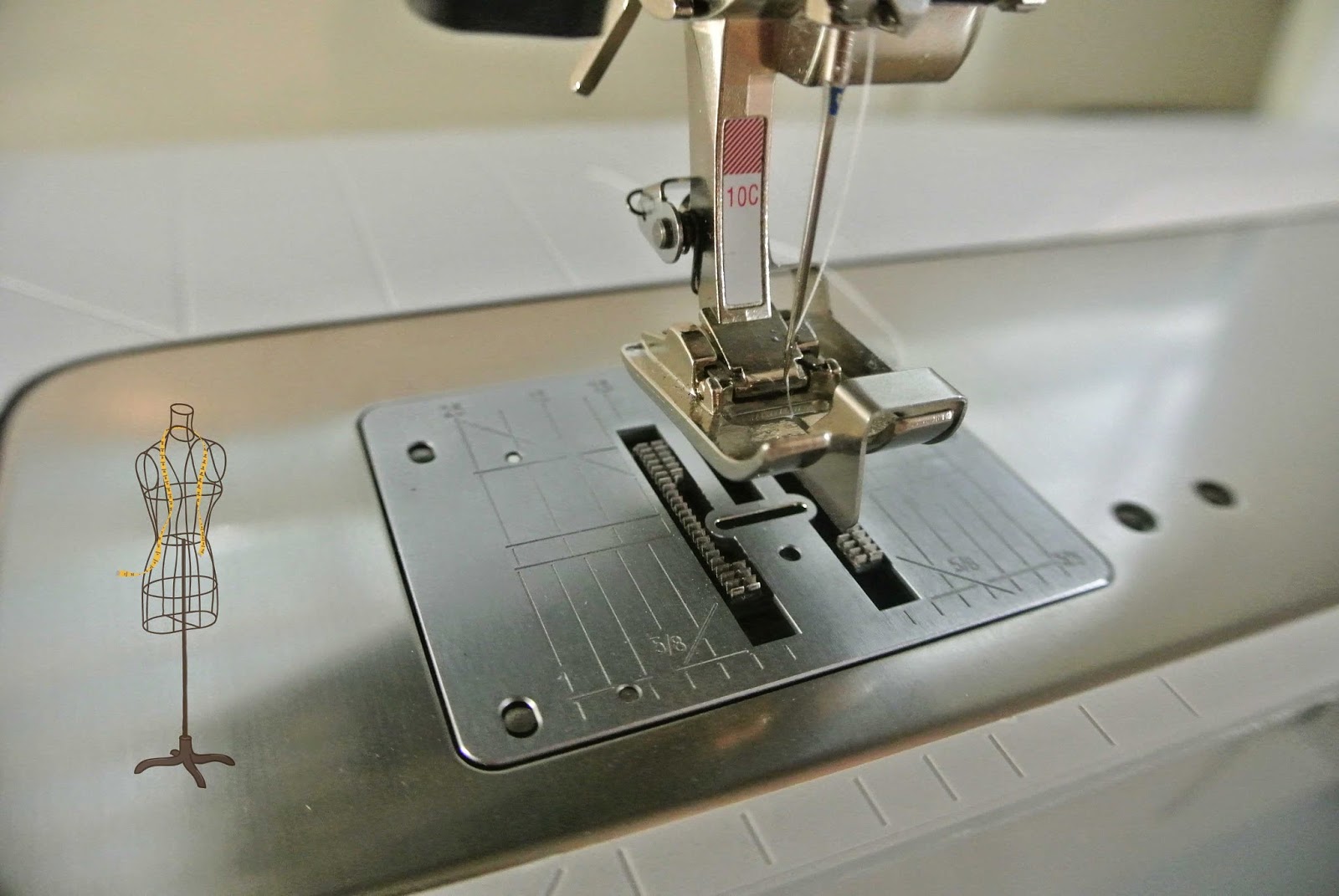
I use my number 10C presser foot when I topstitch.
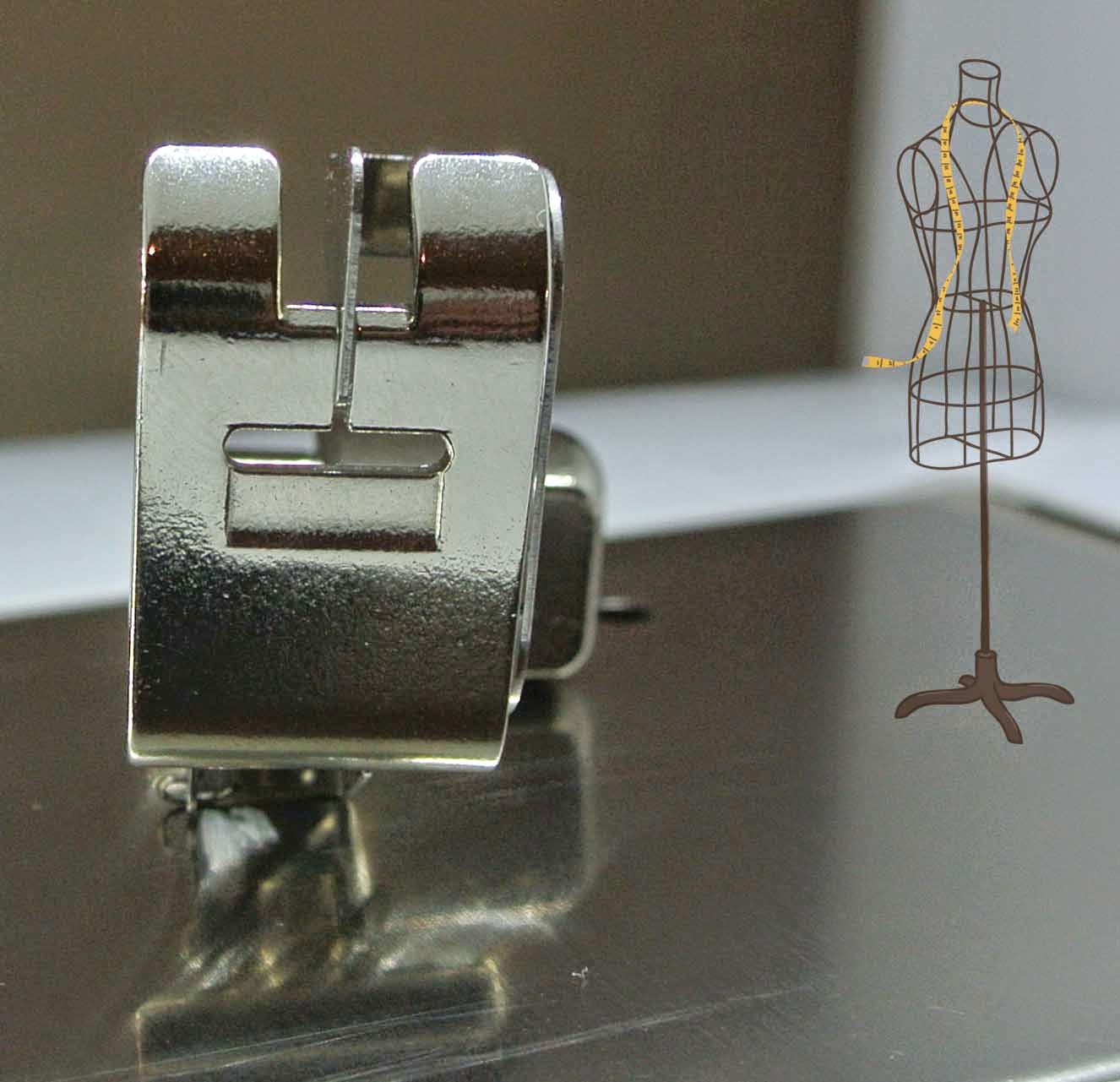
It is called an edgestitch foot.
 
As you can see from the bottom of the presser foot,
it has a metal guide running through the middle of the foot.
 
Simply position that guide along the edge of your fabric,
set the needle either to the left or the right of the guide, and stitch.
The result is a perfectly placed, even line of stitching.
 
The next time you want to add topstitching to your project, give the triple straight stitch a try.
Use your regular presser foot if you don’t happen to have the edgestitch foot.
It works just as well, but you will have to be more attentive to keeping your stitch line
an exact distance from the edge of your fabric throughout the length of topstitching.
 
Happy stitching, my friends!


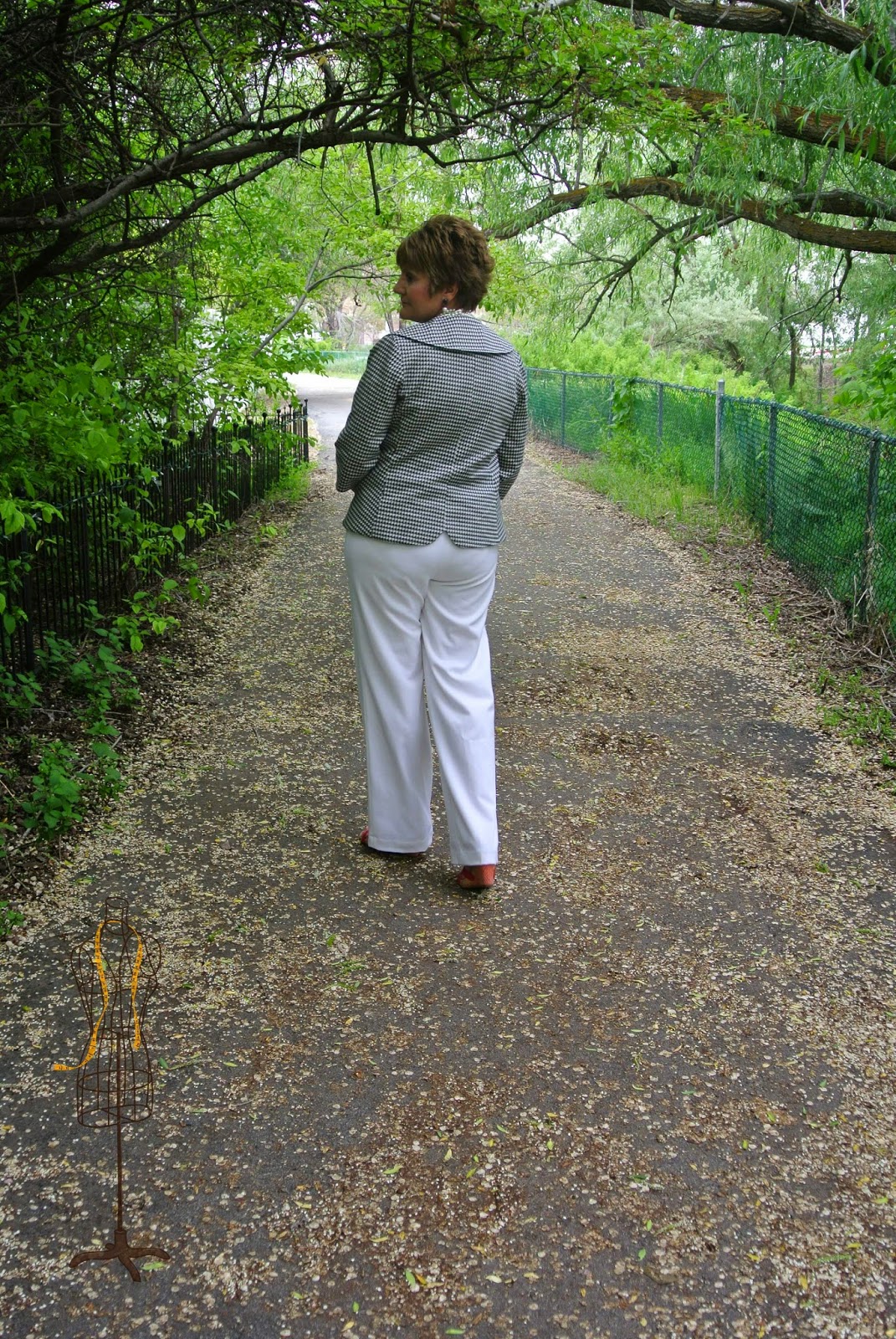
Herringbone Jacket – Simplicity 2728

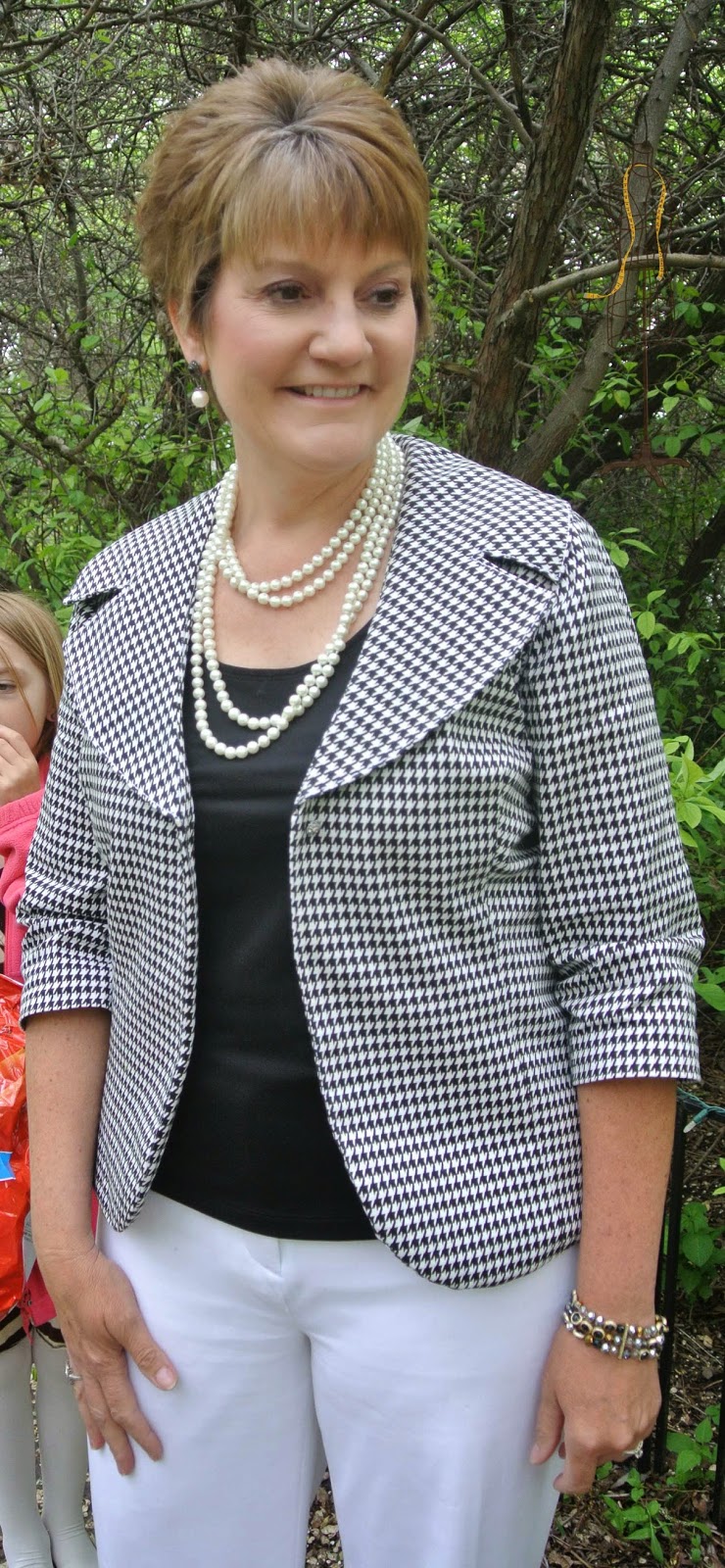
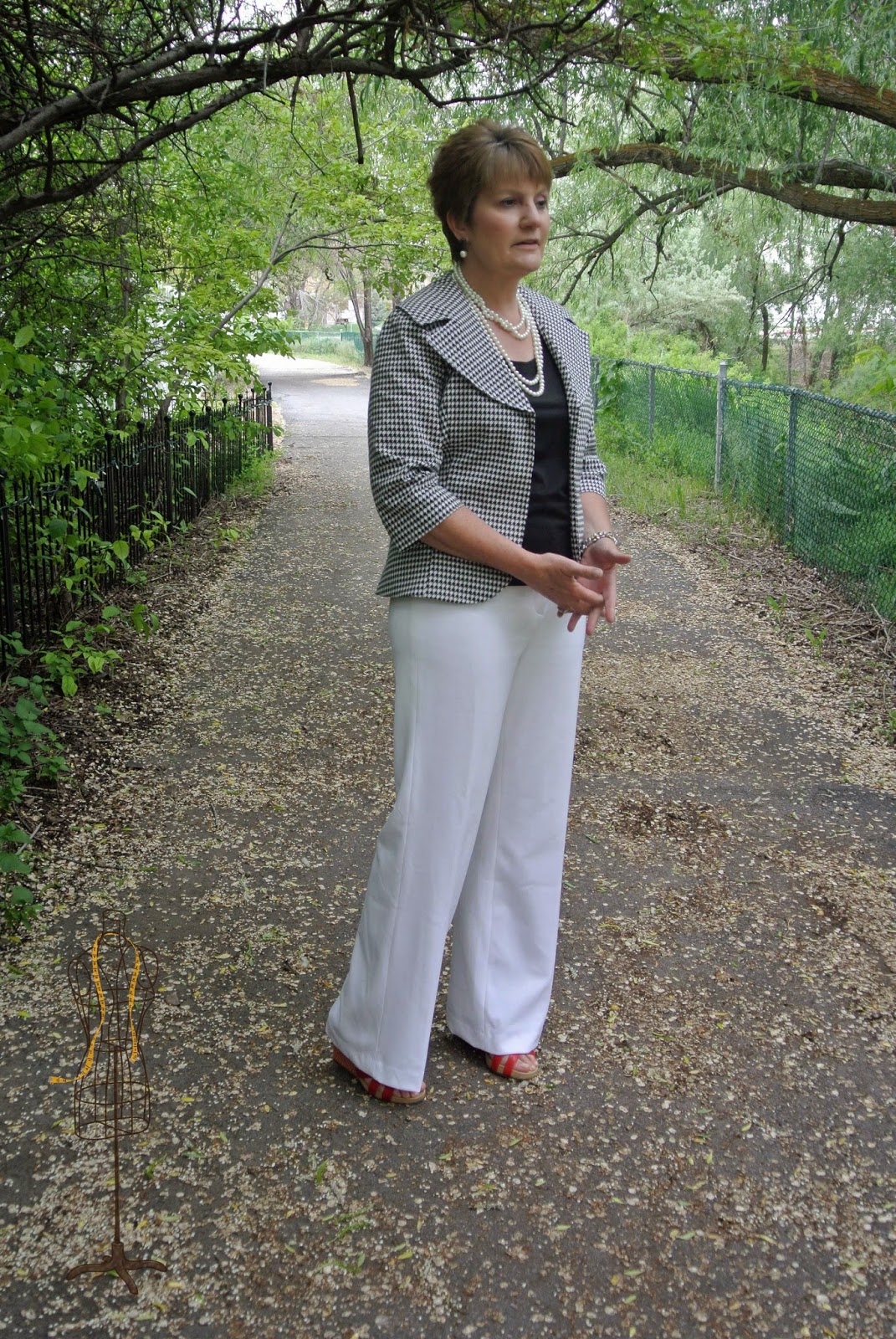
Mother’s Day attire this year was classic black and white.


I notice from this photo that the sleeves were a bit wrinkled.
This was after about 7 hours of wear.
Se la vie     🙂
 
 
This is the third time I’ve sewn up Simplicity 2728.
This go round, I decided to add the notched collar
and forego the pockets.


I see why news anchors and individuals on television
don’t wear herringbone.
Photography of said print proves to be a bit tricky.

 
I like the shorter length of this jacket
as an option to wear with wider leg pants.
The back inverted ‘v’ hem is a nice detail.

 
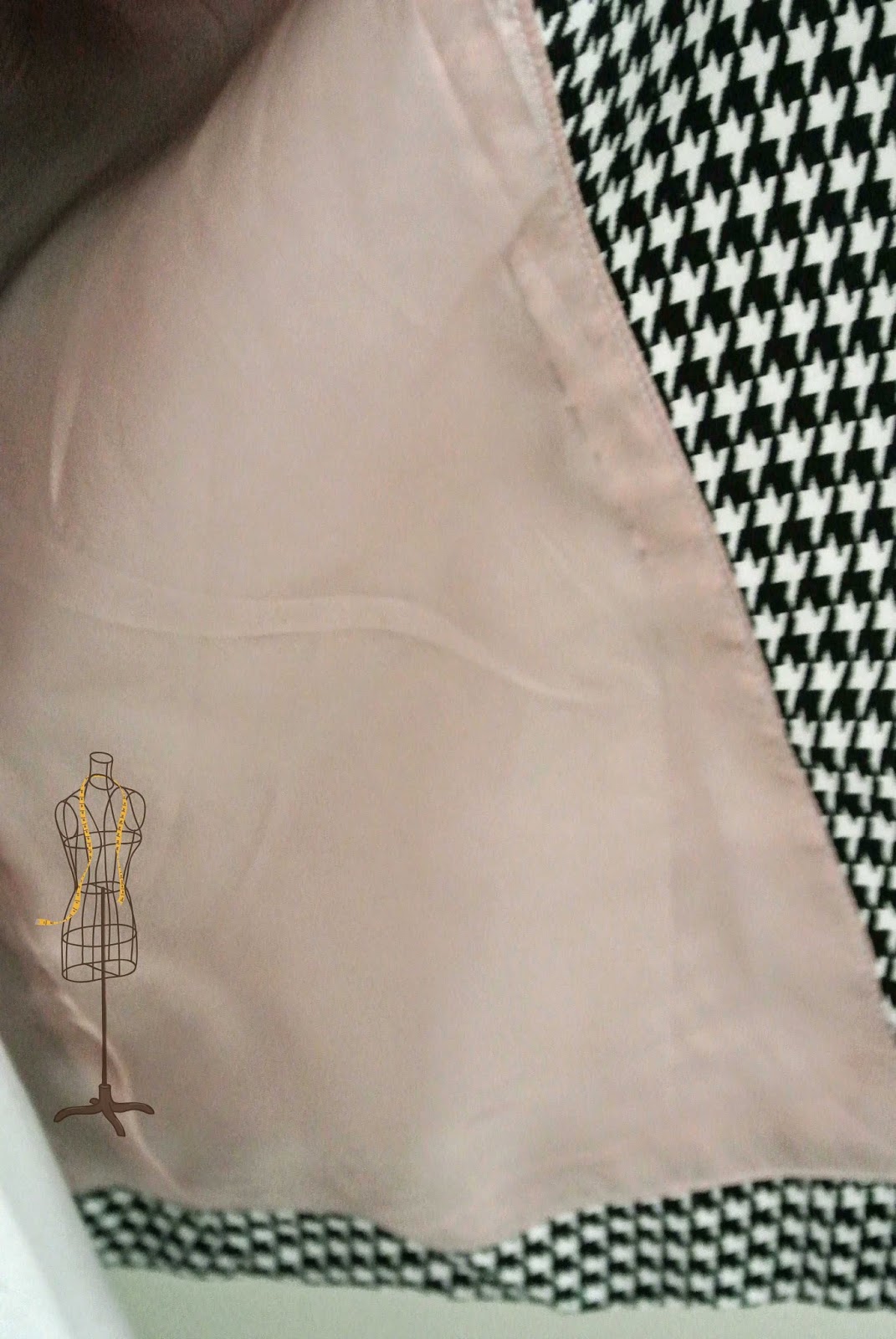
The pale pink lining is Bemberg Rayon.
 
I also plan to wear this version with
white capris and black capris.
A bright tank (such as a fabulous pink)
would add a terrific pop of color.
Hmmmm, I see myself sewing up a new tank in the near future.
 
What about you, my friends.
Do you make many jackets during the warmer weather?
Or do you concentrate on jackets more during cooler weather?