Baby Kimono and Booties

Hello sweet readers!  I must confess that as of late, I have somewhat lost my sewing mojo. About a month ago,  I decided to sew up this little infant set.  What’s that?  You ask for whom am I sewing this little set?  I haven’t a clue.  I don’t even know what obsessed me to sew something of this nature, as I find infant clothing rather tedious and frustrating.  So as I was saying, it was about a month ago that I decided to embark upon this sewing project.  Lo and behold, my desire to sew began to wane shortly after cutting out the pattern pieces.  Does the project itself, the fabric, or perhaps the intended use have anything to do with my enthusiasm for said project?  I think yes.  I thought the project itself would give me a broader range of experience in other types of sewing (infant wear is a bit out of the box for me); and while I do like the fabric a lot, I chose the wrong weight of fabric for the top; and, finally, the intended use is for a baby, yes, but what baby I have no idea.  Therefore, it took me a month to finally complete such a small garment.
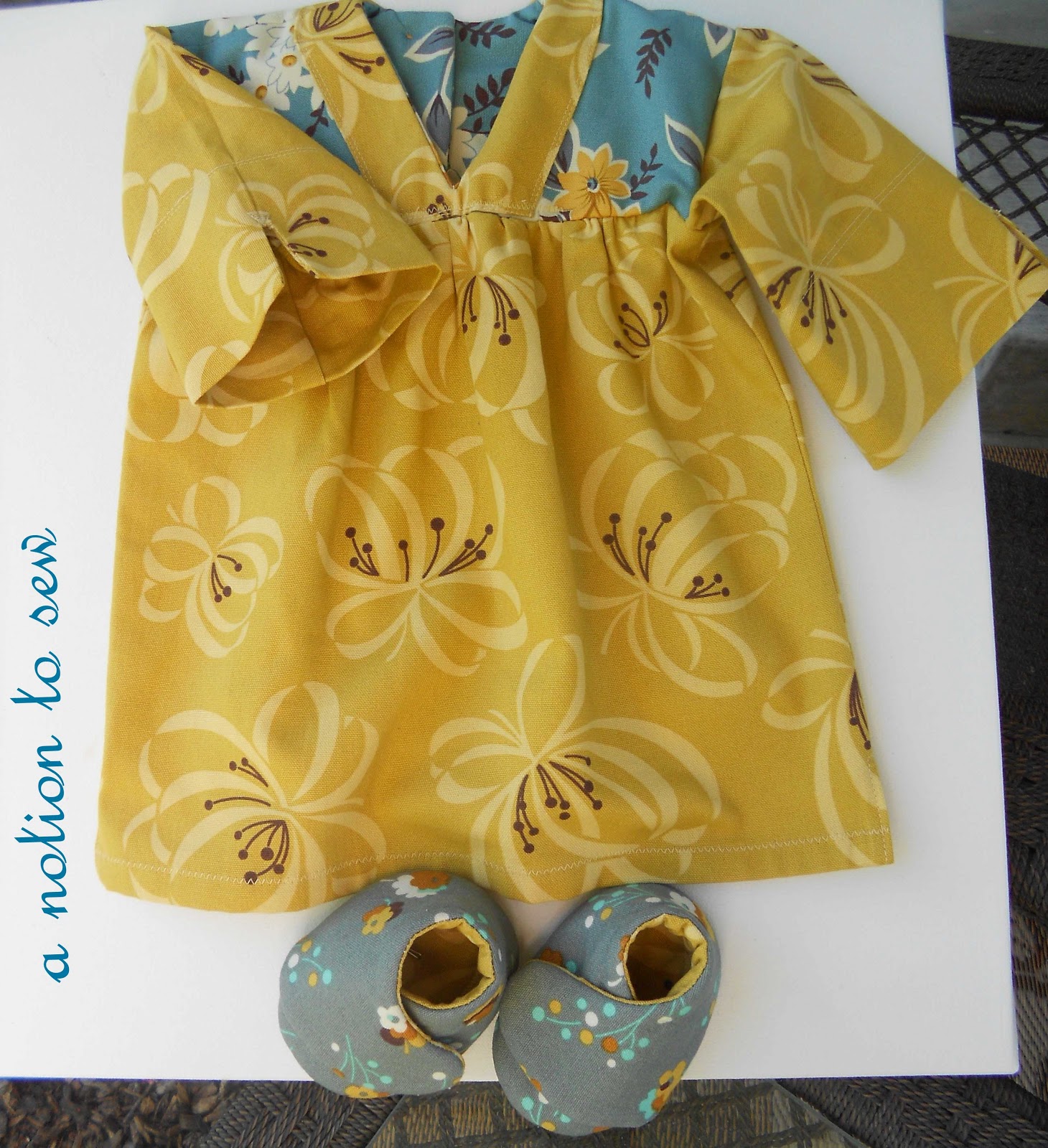
But look at that outfit.  Isn’t it sweet?  I do attend quite a number of baby showers, so I shall hang on to these until I am next invited to one for a precious little girl and I will already have a gift in hand.

Both patterns are from Amy Butler’s Little Stitches for Little Ones.    I sewed them up in the 0-3 month sizes, but, to be honest, they look like a 3-6 month old sizing would be more appropriate.
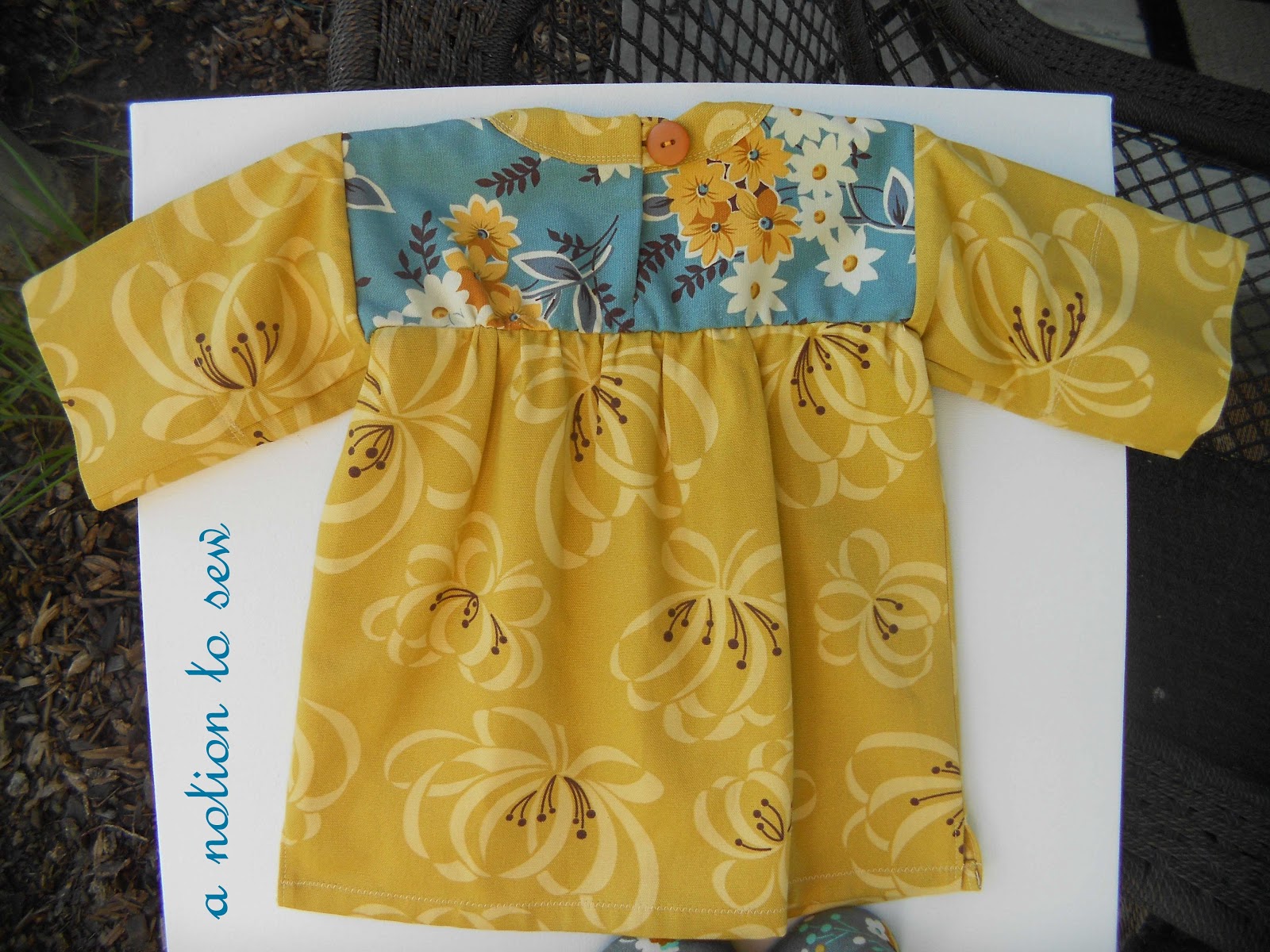
Back View

The fabric line is County Fair by Denyse Schmidt for Westminster Fabrics.  It is a home dec weight fabric and is slightly heavier than a regular quilting cotton.  I would recommend using the regular quilting weight cotton for the top (if I were to make this again that would be my choice as this home dec weight fabric doesn’t have a lot of drape to it).  I would, however, stick with the slightly heavier weight fabric for the booties.  It gave them nice structure.

The fly stitch, which is included on my sewing machine, proved to be a perfect choice to finish off the top of the slit on the kimono-style sleeve.

These two patterns from Little Stitches for Little Ones are letter G Cutie Booties and letter H Easy Empire-Waist Top.

I would welcome comments from any of you who might have Amy Butler’s Little Stitches for Little Ones.  I find the instructions well written, however, I do need some drawings now and then to ensure I am on the right track, as Amy Butler’s pattern tend to use some techniques not found in a lot of main stream patterns.  But, to my dismay, there are not a lot of step-by-step drawings to accompany the instructions.  Anybody else find that to be the case?

I’m please with the end result(s), but I doubt I will sew these two patterns again.

My mojo is returning as I envision the garment on my dress form that is about half way complete.  It will be a great addition to my summer wardrobe.  The pattern is from the April issue of Burda Style.  More on that later.

Have a great weekend and those of you Stateside have a safe and restful holiday weekend.

Pam
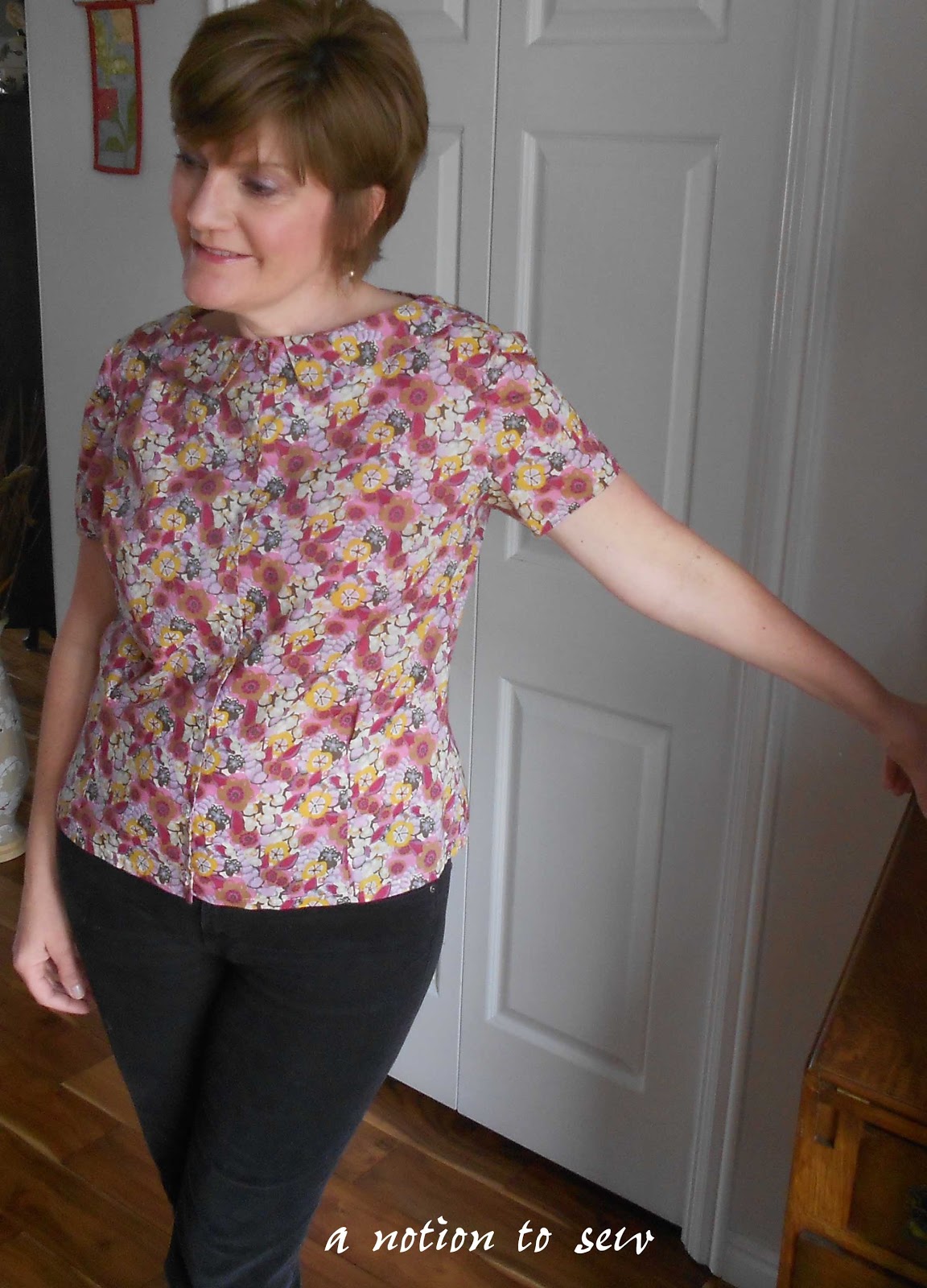
Another Sassy Librarian Blouse

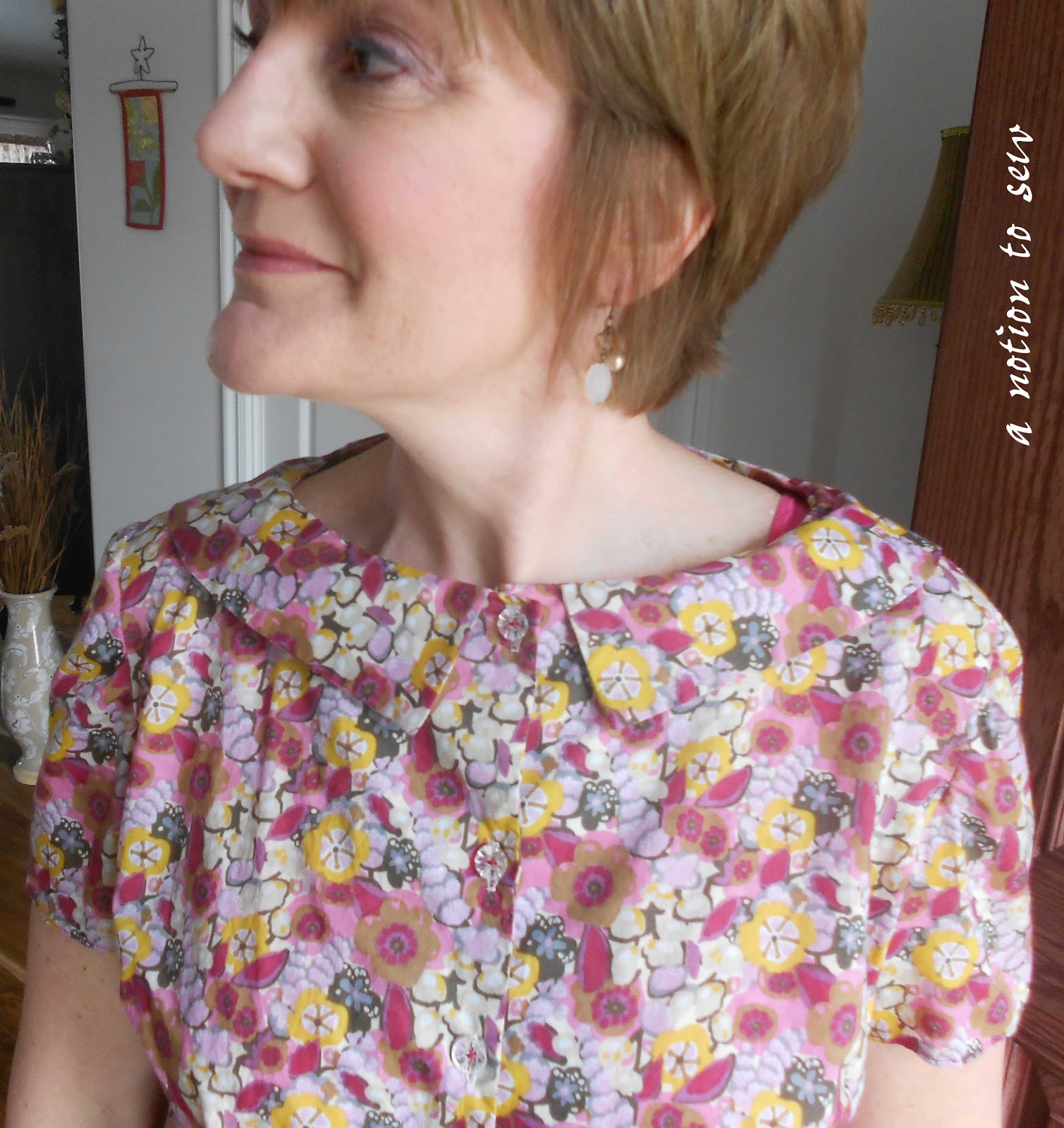
I found myself wearing my original version of The Sassy Librarian Blouse so much, that I knew I needed to sew another one.  This time, instead of 100% cotton quilting fabric, I used 100% cotton voile.  The fabric has a lightweight hand, similar to batiste.  It is an Anna Maria Horner voile print.

When I made this blouse for the first time last fall, I increased the length of the front vertical darts by 2″ because the blouse seemed to be a bit boxy.  This time, I did not increase the length of those darts because the fabric drapes so nicely that it doesn’t have that boxy feel to it.  Here’s a closer view of the wide collar.  You can also see the drape better in this photo.

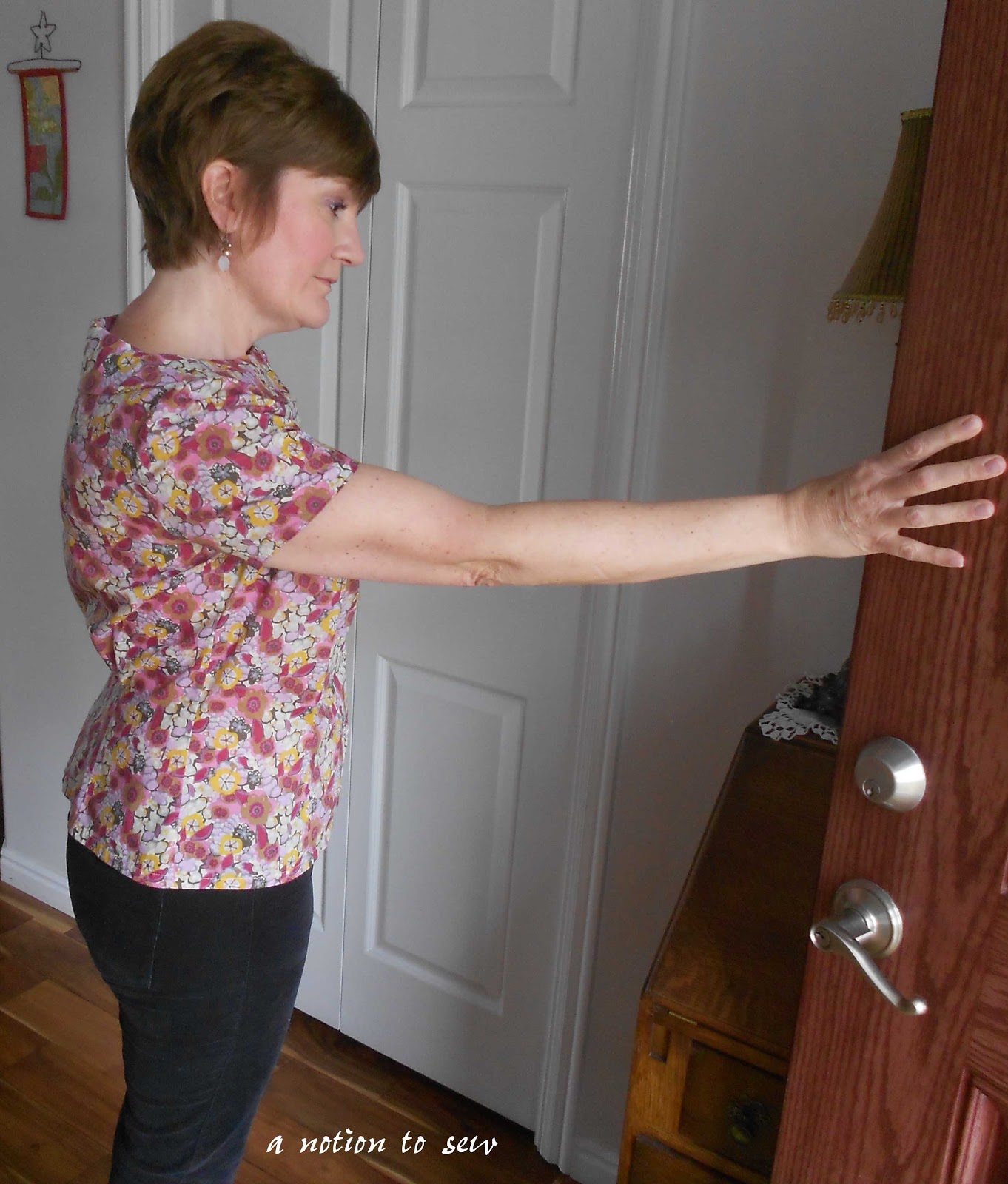
One of my favorite details of this pattern is the shaping that the back vertical darts give.  The shaping shows up quite prominently from the side view.

All in all, this is a comfortable alternative to knit tops.  I always wear it very casually just as I wear t-shirts.  The voile fabric also washes up nicely (no need for gently cycle) and it doesn’t require ironing if I remove it from the dryer as soon as it is dry.   If you like the feel of batiste or lawn, give the Anna Maria Horner voile a try.  You most likely will not be disappointed.

Happy Sewing,

Pam

Easter Jacket

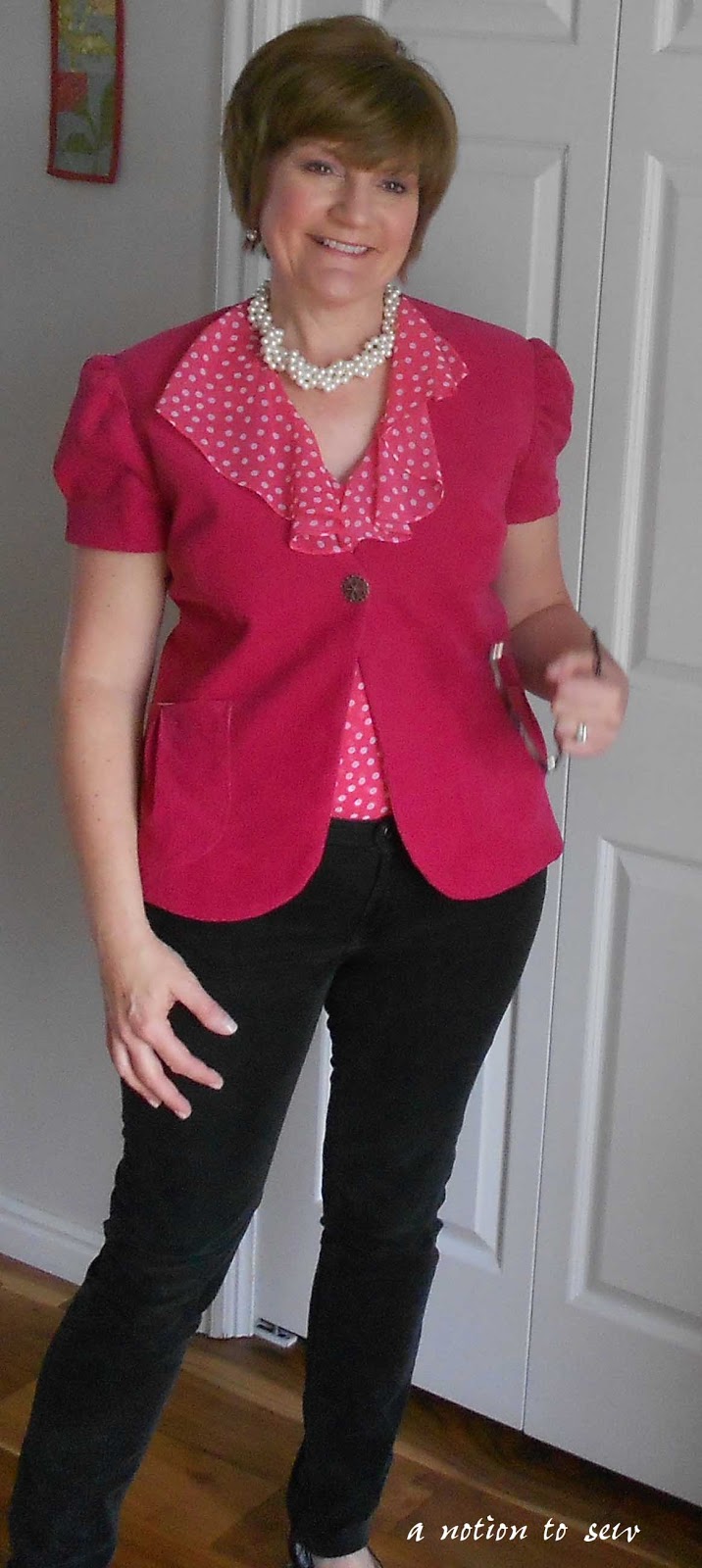
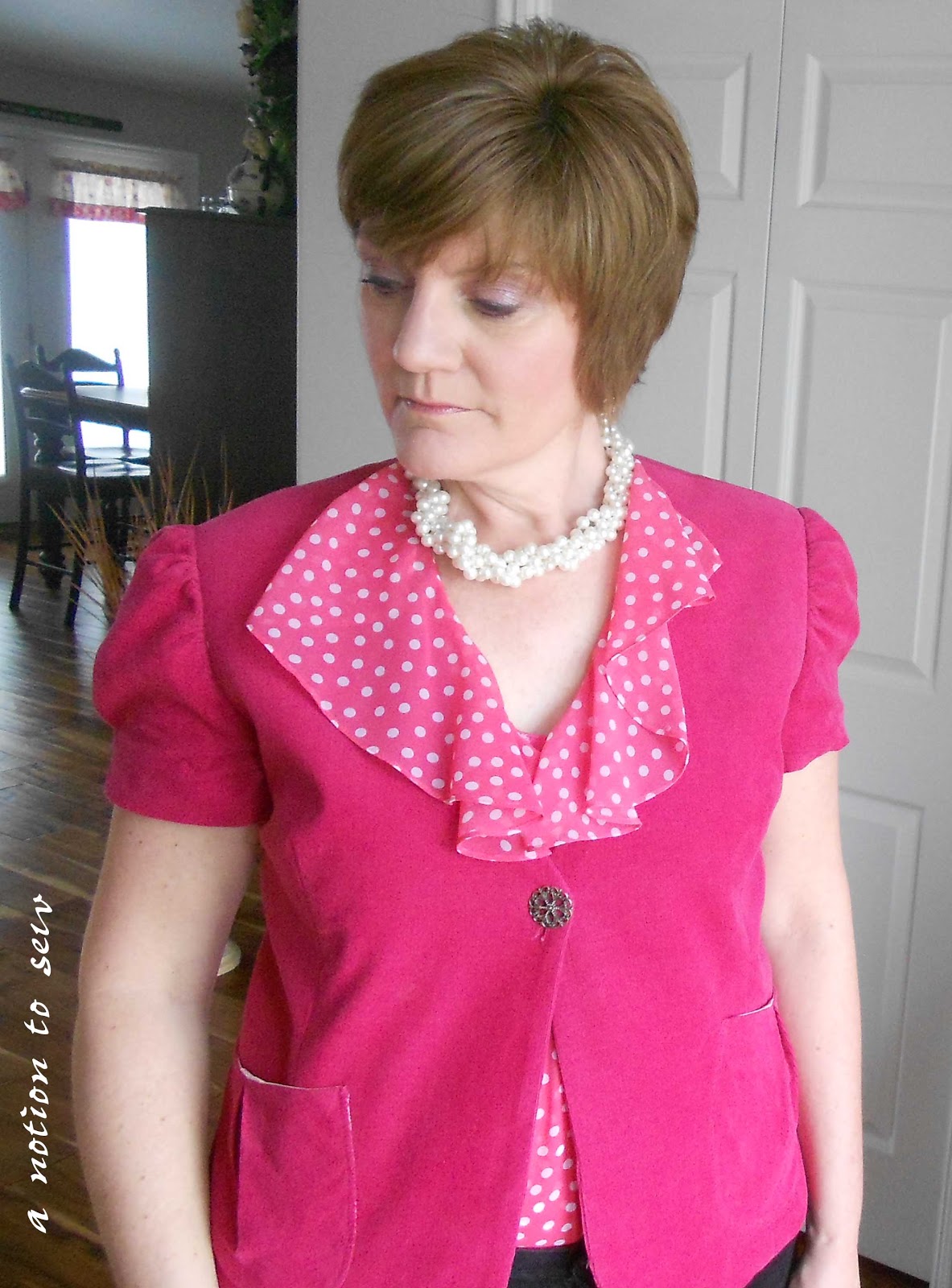
I was in need of a shorter jacket to wear with my new Colette Meringue skirt (and jeans, and capris, and slacks – you get the idea!).  This Project Runway inspired pattern, Simplicity 2728, was the answer.


Worn with my Colette Meringue skirt – beautiful, bright spring colors make me happy   🙂

Here it is with skinny, black corduroy pants, which is more weather appropriate since *sigh* it is raining and snowing here today:

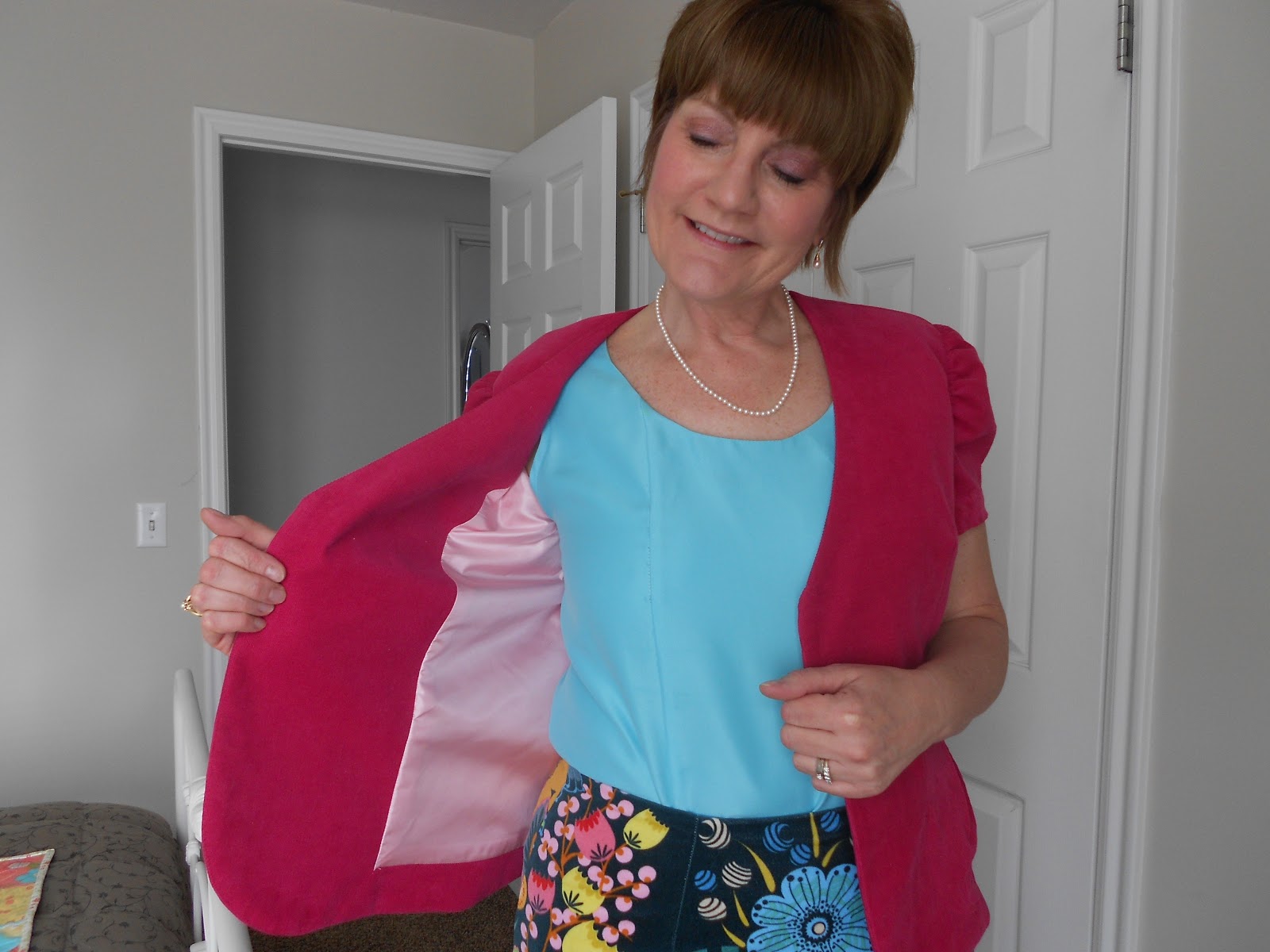
Can you see that teeny little pop of light pink color at the top of the pockets?  The jacket was so solid, that I thought I would add just a subtle touch of interest by lining the pockets with the same light pink lining that I used inside the jacket.  By omitting the pocket facing that was included in the pattern, I was able to stitch the lining fabric to the pocket fabric, right sides together, then turn and press. Because the lining fabric is much lighter than the corduroy, and there is no facing, the lining pulls ever so slightly to the top of the pocket giving a glimpse of what is inside.

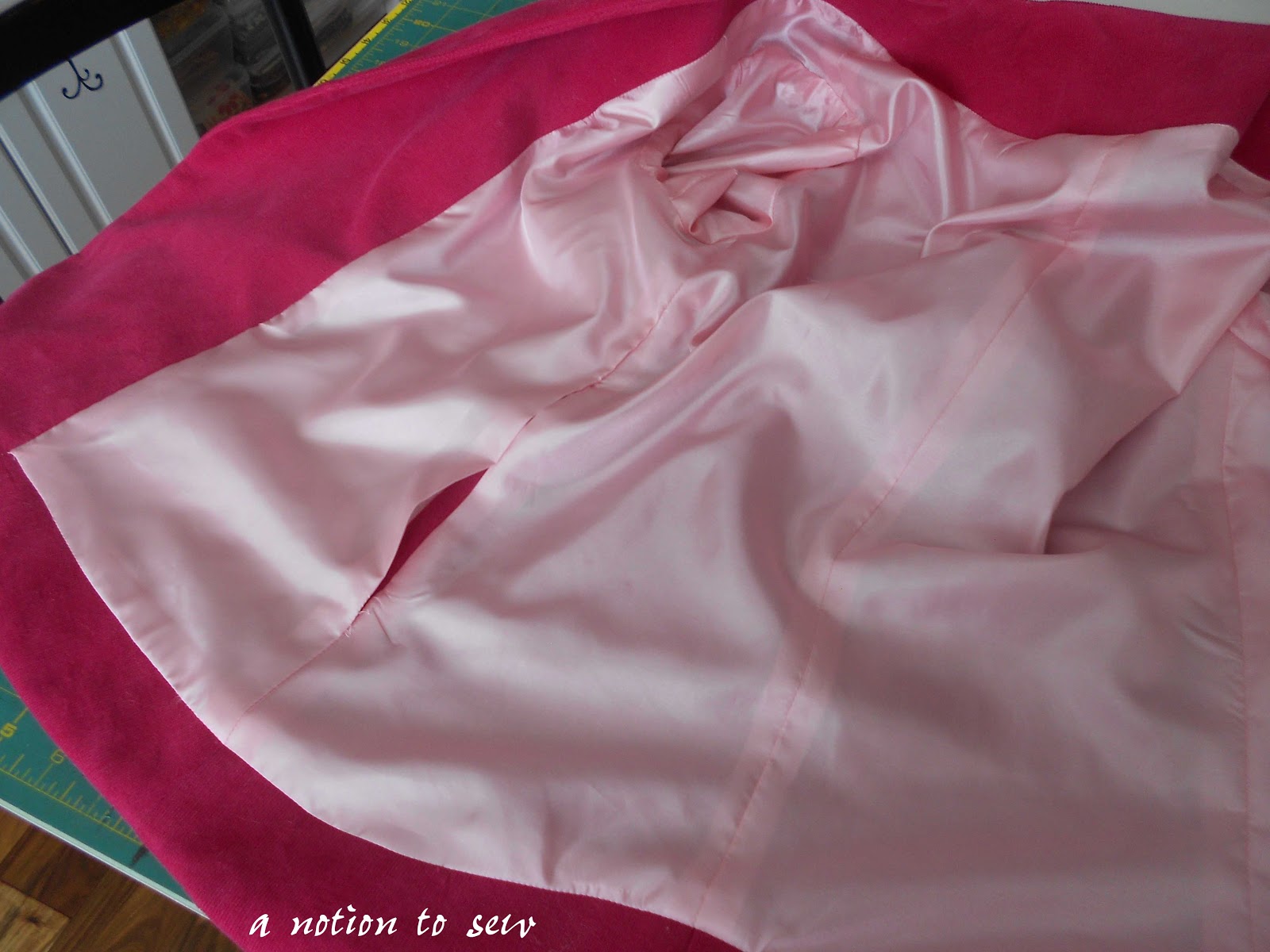
Speaking of lining, I really like the way this pattern has a facing that goes around the entire outer edge of the jacket, so the lining is attached completely to the facing (no messy hemming – well, my hemming is usually messy anyway!).  The facing is then sewn onto the outer edges of the jacket.  It gives such a nice, clean finished edge around the whole inside of the jacket.

Before sewing the lining to the facing, part of one side seam in left open for turning.

After sewing the facing, with lining attached, to the outer jacket, the open side seam in the lining can easily be hand sewn closed.

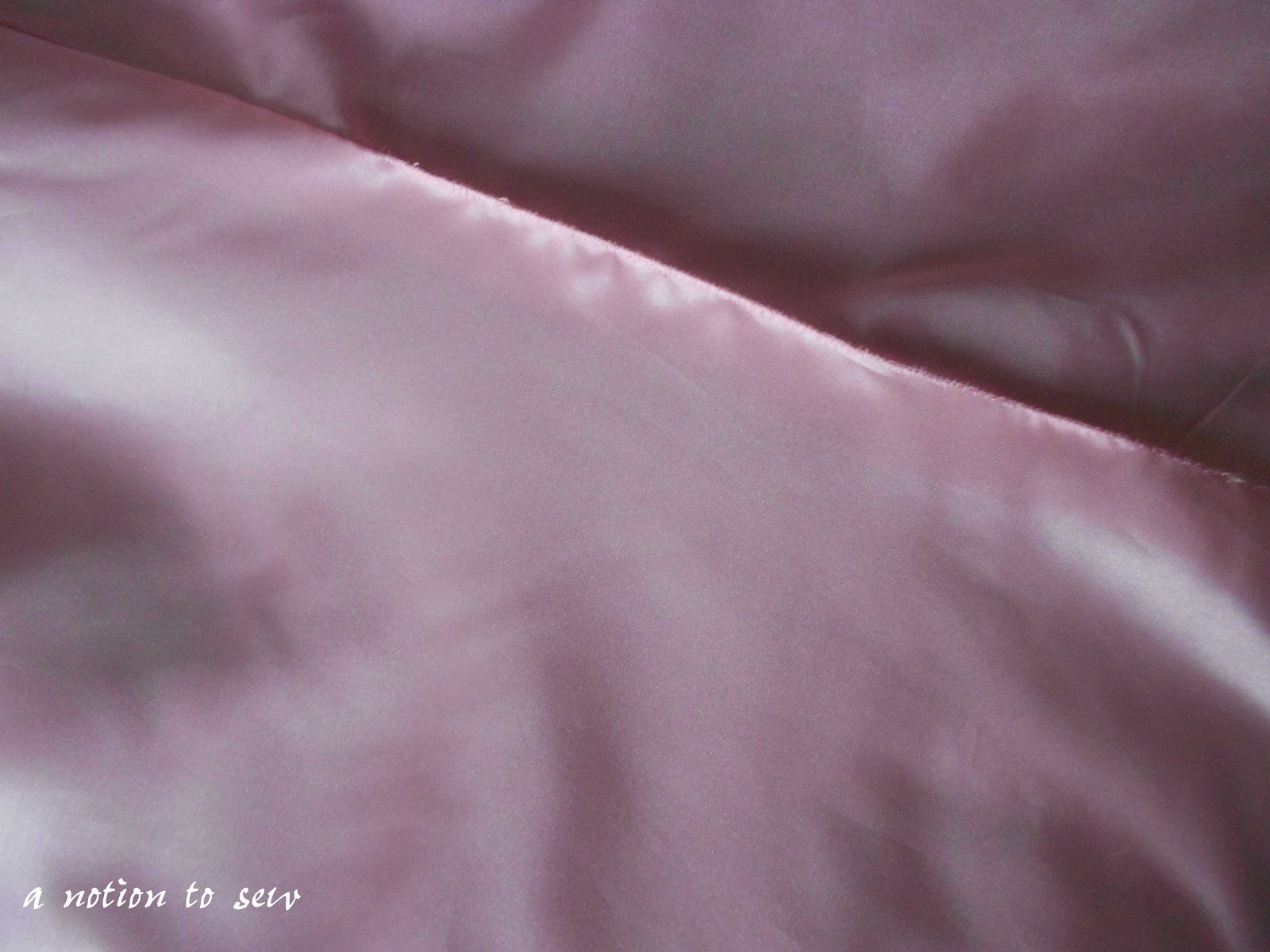
I used an itty bitty overcast stitch to close up the opening in the lining

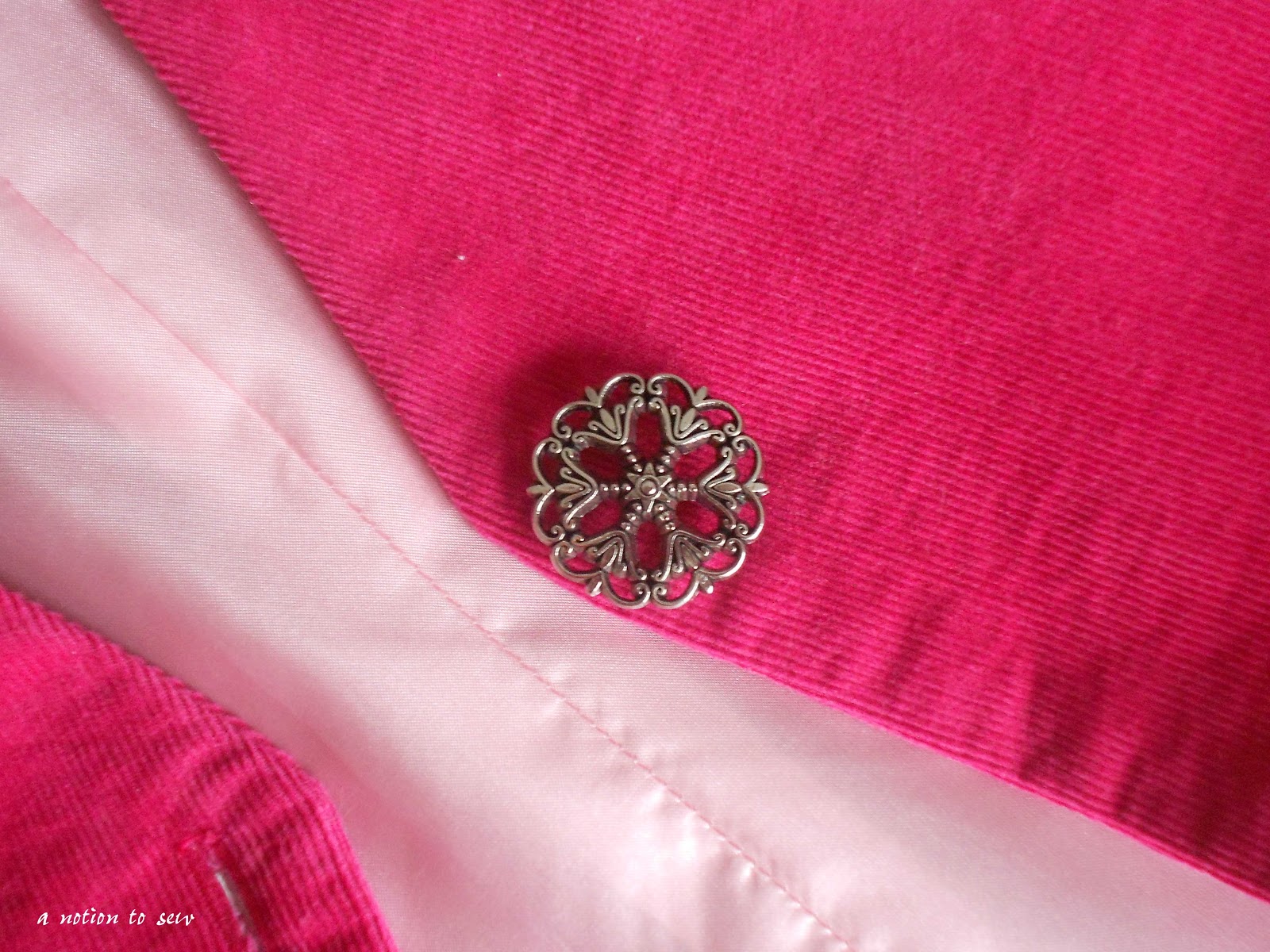
I prefer to wear my sweaters and jackets buttoned just below the bust line and not all the way down to the hem, so I added only one button to the front of this jacket.  Why add all those buttons and buttonholes is I’m not going to use them?

Now if the weather will only cooperate, I can wear this short-sleeved beauty most of the spring and into summer.
Pam